How Does an ASRS System Work? A Complete Guide to Automated Storage and Retrieval Systems

How Does an ASRS System Work? A Complete Guide to Automated Storage and Retrieval Systems
Introduction
As warehouses face increasing pressure to store more inventories, fulfill orders faster, and reduce operational costs, businesses are turning to Automated Storage and Retrieval Systems (ASRS) to improve efficiency. An ASRS system automates the process of storing, locating, and retrieving inventory, helping organizations maximize space utilization while minimizing human intervention.
If you’re wondering how an ASRS system works, this guide explains the process, components, benefits, and applications of automated warehouse storage solutions.
What is an ASRS System?
An Automated Storage and Retrieval System (ASRS) is a computer-controlled warehouse automation solution that automatically places and retrieves inventory from designated storage locations.
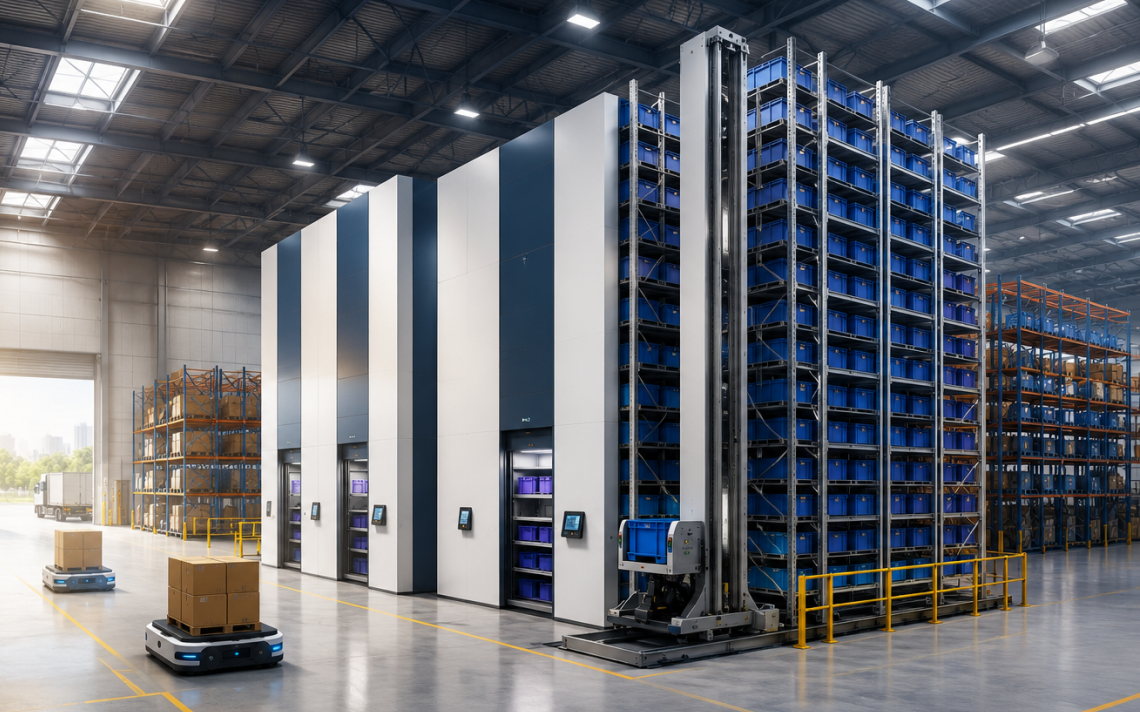
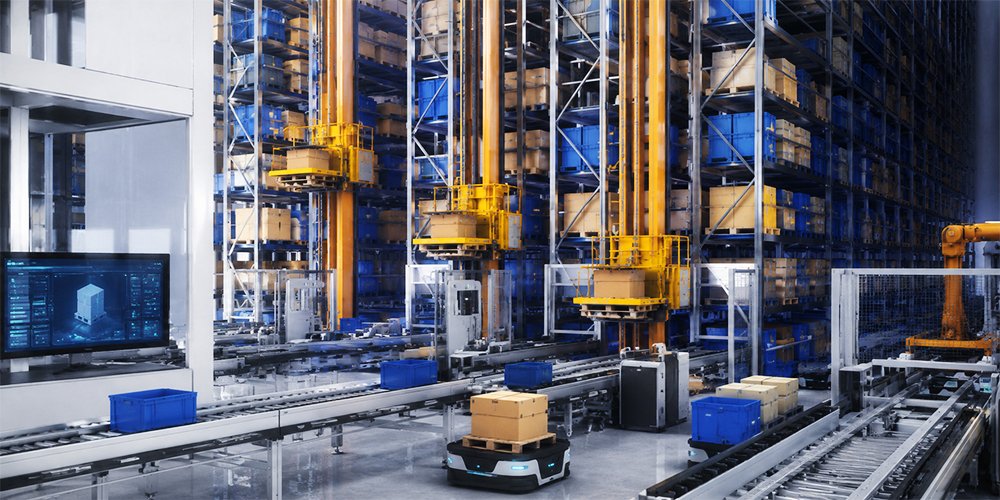
The system combines software, storage racks, conveyors, robotic shuttles, cranes, or Vertical Lift Modules (VLMs) to manage inventory with speed and precision.
Quick Answer:
An ASRS system works by receiving a storage or retrieval request through warehouse management software. Automated machines then identify the correct storage location, move to that location, retrieve or store the item, and deliver it to the operator or dispatch area without manual searching.
How Does an ASRS System Work?
The operation of an ASRS system follows a simple but highly efficient process.
Step 1: Inventory Entry
When products arrive at the warehouse:
- Items are scanned using barcodes or RFID tags.
- Product details are recorded in the Warehouse Management System (WMS).
- The system assigns the optimal storage location based on item dimensions, weight, and demand frequency.
Step 2: Automated Storage
Once a storage location is assigned:
- Conveyors or lifts transport the item.
- ASRS cranes, shuttles, or VLM mechanisms move the item to the designated location.
- Inventory data is updated automatically in real time.
This eliminates manual storage errors and improves inventory accuracy.
Step 3: Inventory Tracking
Every item stored within the ASRS is continuously tracked.
The software monitors:
- Item location
- Stock quantity
- Movement history
- Order demand
- Storage utilization
This provides complete inventory visibility across the warehouse.
Step 4: Retrieval Request
When an order is placed:
- The Warehouse Management System sends a retrieval command.
- The ASRS identifies the exact storage location.
- The machine automatically travels to retrieve the required item.
Step 5: Goods Delivery
The retrieved item is delivered to:
- Picking stations
- Packing areas
- Production lines
- Dispatch zones
Operators receive products directly without spending time searching through storage racks.
Key Components of an ASRS System
- Storage Structure
The storage system consists of:
- High-density racks
- Shelving systems
- Trays
- Bins
- Vertical storage towers
These structures maximize available warehouse space.
- Retrieval Machines
Depending on the ASRS type, retrieval equipment may include:
- Stacker cranes
- Robotic shuttles
- Vertical Lift Modules (VLM)
- Vertical Carousel Systems
- Mini-load cranes
- Warehouse Management Software
The software serves as the brain of the system by:
- Managing inventory locations
- Processing orders
- Monitoring stock levels
- Optimizing storage allocation
- Conveyors and Transfer Systems
Conveyors transport inventory between storage locations and workstations efficiently and safely.
Types of ASRS Systems
A VLM stores inventory vertically using trays that are automatically delivered to the operator.
Best for:- Spare parts storage
- Manufacturing facilities
- Pharmaceutical inventory
Designed for handling large pallets and heavy loads.
Best for:- Distribution centers
- Large warehouses
- Manufacturing plants
Used for smaller cartons, bins, and totes.
Best for:- E-commerce warehouses
- Retail distribution centers
Utilizes autonomous shuttles moving horizontally and vertically.
Best for:- High-speed order fulfillment
- High-volume inventory operations
Benefits of an ASRS System
Maximizes Warehouse Space
ASRS systems utilize vertical storage space effectively, reducing warehouse footprint requirements by up to 85%.
Improves Inventory Accuracy
Automated tracking minimizes human errors and improves inventory accuracy levels to over 99%.
Faster Order Fulfillment
Automated retrieval significantly reduces picking times, enabling quicker order processing.
Reduces Labor Costs
Since machines perform storage and retrieval tasks, businesses require fewer manual handling operations.
Enhances Workplace Safety
Employees spend less time operating forklifts, climbing ladders, or handling heavy inventory.
Real-Time Inventory Visibility
Managers gain complete control over stock levels and warehouse performance through integrated software.
Industries Using ASRS Systems
Many industries rely on automated storage and retrieval systems, including:
- Manufacturing
- Automotive
- Pharmaceutical
- E-commerce
- Retail
- Aerospace
- Electronics
- Healthcare
- Logistics and Distribution
Is an ASRS System Right for Your Warehouse?
An ASRS system is ideal if your business faces:
- Limited warehouse space
- Rising labor costs
- Inventory management challenges
- Slow order fulfillment
- High picking errors
- Growing SKU counts
Warehouses handling large inventory volumes often achieve substantial operational improvements through automation.
Why Businesses Are Investing in ASRS Warehouse Automation
As supply chains become more complex, businesses need solutions that improve efficiency without expanding warehouse space. Automated Storage and Retrieval Systems provide a scalable, future-ready approach to inventory management.
By increasing storage density, improving inventory accuracy, and accelerating order fulfilment, ASRS systems help organizations remain competitive while reducing operational costs.
Conclusion
Understanding how an ASRS system works is the first step toward transforming warehouse operations. By automating storage, tracking, and retrieval processes, businesses can achieve higher productivity, better inventory control, and significant space savings.
Whether you’re considering a Vertical Lift Module, Shuttle ASRS, or Unit Load ASRS, warehouse automation can deliver measurable improvements in efficiency, accuracy, and profitability.
If you’re looking for advanced ASRS solutions in India, Techmark Storage provides customized warehouse automation systems designed to optimize storage capacity and streamline operations.