The Future of Warehouse Efficiency: Why Smart Logistics is Moving Past Traditional Racks

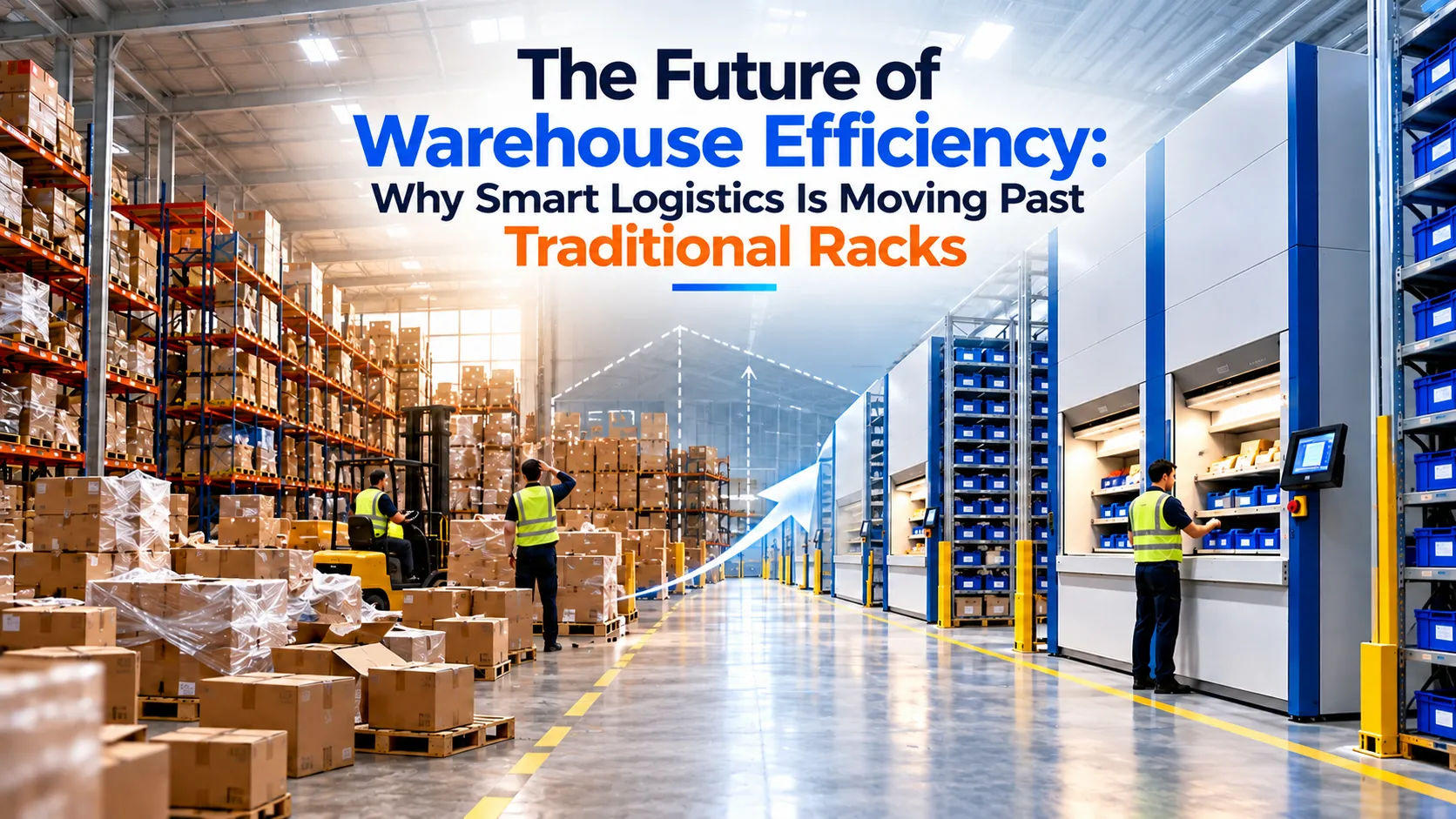
The Future of Warehouse Efficiency: Why Smart Logistics is Moving Past Traditional Racks
If you manage a warehouse, manufacturing plant, or logistics hub today, you already know the intense pressure you are under. Supply chains are moving faster, customer expectations for same-day delivery are non-negotiable, and commercial real estate prices are stubbornly high.
Yet, walk into many industrial facilities, and you’ll find a startling contrast: hyper-advanced order processing software paired with decades-old storage methods. Stacks of static heavy-duty racks, wide aisles eating up precious square footage, and workers burning hours climbing ladders or walking miles to fulfill a single pick list.
The market has shifted. Finding space used to mean leasing a bigger building. Today, market leaders are realizing that the solution isn’t horizontal expansion, it’s vertical intelligence and warehouse automation.
The Hidden Bottlenecks Costing You Money
When companies look at warehouse optimization, they often focus solely on shipping speeds or labor costs while ignoring the root cause of inefficiency: wasted cubic volume.
The Air Gap Trap: Standard static racking leaves enormous pockets of empty air between your top shelf and the ceiling. You are paying rent or mortgage on square footage that is technically empty.
The Picking Marathon: In manual warehouses, workers spend up to 50% of their time simply walking between aisles. That’s wasted labor cost and an ergonomic strain waiting to happen.
Inventory Inaccuracies: Manual entry and mis-picks eat into profit margins and frustrate end customers.
To stay competitive, modern facilities are ditching legacy layouts in favor of dynamic storage solutions designed to maximize both speed and space.
1. Automated Storage & Retrieval Systems (ASRS)
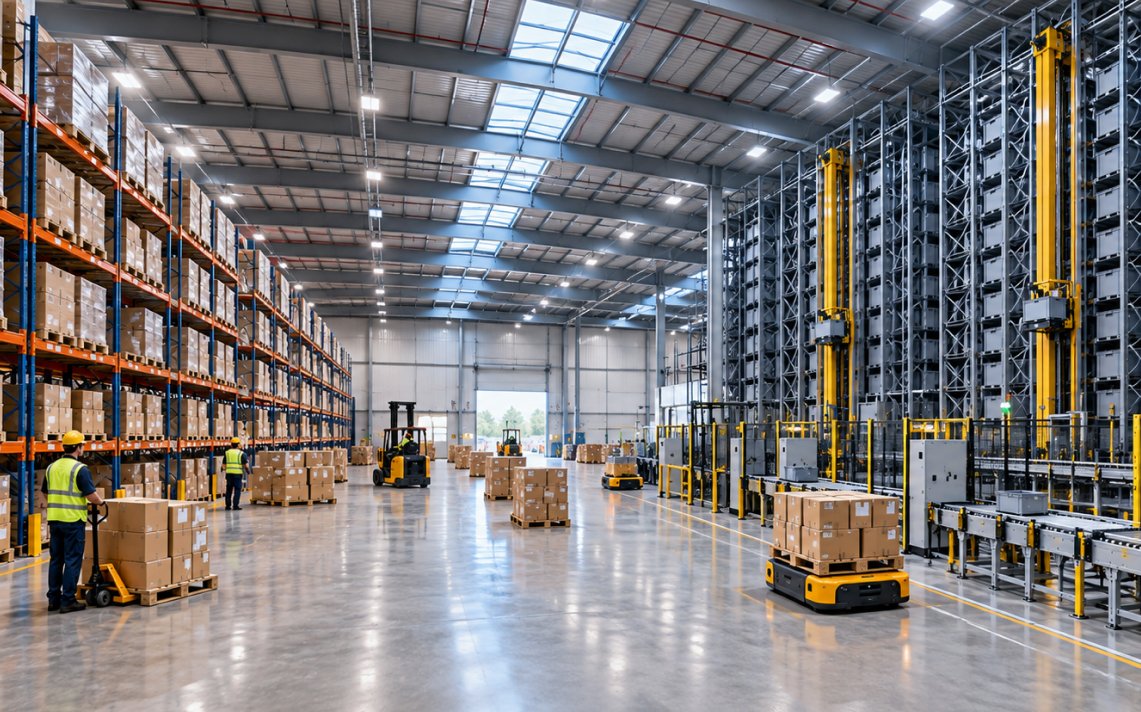
For high-volume, space-constrained warehouses, an ASRS system acts as the backbone of high-density storage. Whether utilizing Mini-Load ASRS for small cartons and bins or Double Deep ASRS for heavy pallet storage, these systems use automated stacker cranes and precision mechanics to handle heavy loads with zero guesswork.
2. Vertical Lift Modules (VLMs) & "Lean Store" Systems
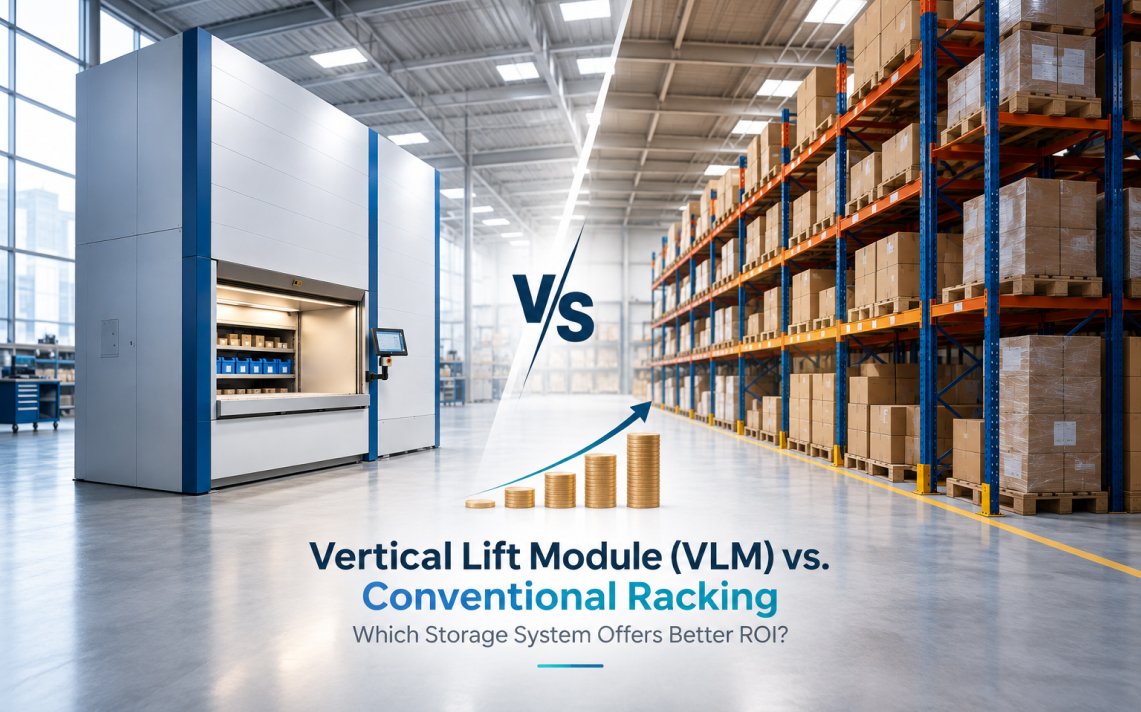
Think of a Vertical Lift Module as an automated high-rise tower for your inventory. Instead of making operators search through floors of shelving, a central mechanism measures incoming items dynamically and brings the exact product right to the operator (goods-to-person technology). Systems like Tech Mark’s Lean Store (AVRS) adapt effortlessly to odd-shaped components, raw materials, or spare parts of varying dimensions.
3. Vertical Carousels (V-Store)
Ideal for high-throughput, fast-moving inventory, vertical carousels rotate shelves via the shortest path (clockwise or anticlockwise) using advanced PLC controllers and human-machine interfaces (HMI). They drastically reduce retrieval times while keeping sensitive parts secure.
4. High-Performance Mobile Compactors & Heavy-Duty Racks
Not every section requires full robotics. For dense archival storage or tool management, smart Mobile Compactors use “Easy Glide” technology to collapse multiple aisles into a single moving access lane, drastically multiplying storage capacity within the same footprint.
What to Look for When Upgrading Your Facility
If your operations team is planning a warehouse overhaul this year, keep these four evaluation pillars in mind:
Footprint Optimization: Are you squeezing every possible inch of vertical height out of your building?
Software Integration: Can your storage system sync seamlessly with your existing ERP and inventory tracking software via open APIs to trigger automated dispatches?
Worker Ergonomics & Safety: Does the system minimize heavy lifting, ladder climbing, and repetitive strain injuries, keeping your workforce safe and compliant?
Modular Scalability: Can the system grow alongside your business without requiring a disruptive, ground-up facility redesign?
Stop Searching for Space, Start Finding Efficiency
The logistics landscape has changed permanently. Success today belongs to operations that treat every square foot and every cubic meter as a strategic asset. By replacing static bottlenecks with intelligent vertical storage and automation, businesses can slash retrieval times, boost inventory accuracy, and dramatically scale output without the heavy capital expenditure of moving to a larger facility.
Ready to transform your warehouse floor plan? Explore advanced engineering solutions and find out how to unlock your facility’s hidden potential by visiting Tech Mark Storage.