The 2026 Warehouse Reality Check: Why “More Square Footage” Is a Trap and What to Do Instead

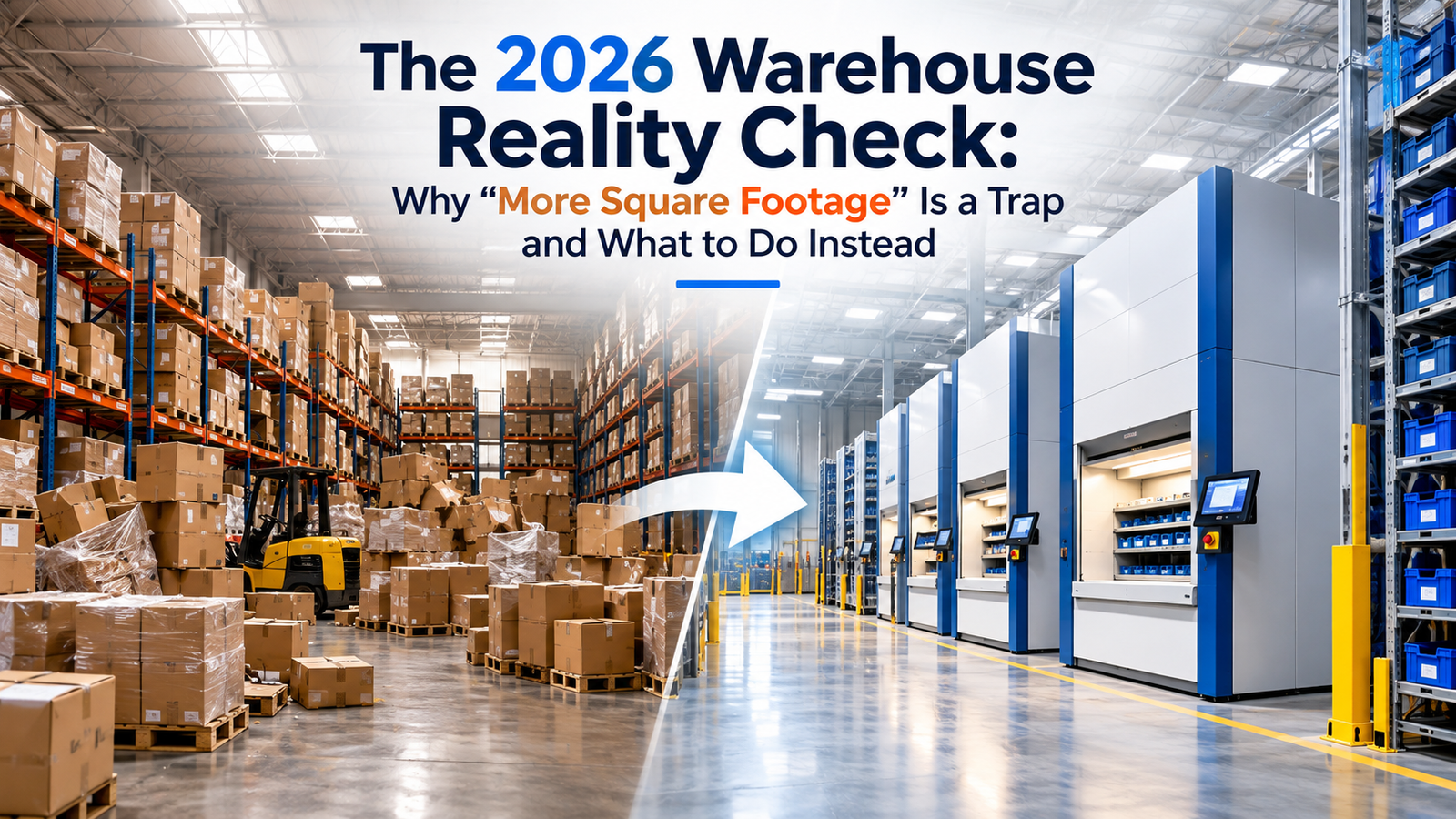
The 2026 Warehouse Reality Check: Why "More Square Footage" Is a Trap and What to Do Instead
Picture this: It’s Monday morning, and your operations manager drops a familiar bomb on your desk.
“We’re out of space again.”
If you run a manufacturing plant, an e-commerce fulfillment hub, or a distribution center, you have heard this sentence more times than you care to count. The standard playbook for decades has been predictable: when inventory overflows, you rent a bigger warehouse, sign a heavier lease, and absorb the rising real estate costs.
Except, in today’s economic climate, that playbook is a financial anchor.
Real estate prices are through the roof, labor is scarce and expensive, and customer delivery expectations demand lightning-fast order processing. Buying or renting more physical square footage isn’t a growth strategy anymore, it’s just an expensive band-aid masking deeper operational inefficiencies.
So, what are industry leaders doing differently in 2026? They aren’t expanding outward. They are looking up.
The Silent Profit Killer: Wasted Vertical Air
Walk into a typical manual warehouse. Take a hard look around. What do you see?
You see wide aisles left clear for forklifts to maneuver. You see static pallet racks and rows of steel shelving that only reach halfway to the ceiling. And above all of that? Miles and miles of expensive, empty, unutilized vertical air.
Traditional storage methods waste an astonishing 50% to 70% of a facility’s total volume. You are essentially paying prime rental rates to heat and cool empty space.
Compounding this problem is human movement. In traditional picker setups, operators spend up to 50% of their shift walking, climbing ladders, searching for SKUs, and pushing heavy carts. Every extra step is a wasted second, and every wasted second compounds into delayed shipments and bloated overhead.
The Shift to “Goods-to-Person” Dynamics
The modern warehouse is undergoing a quiet revolution. Instead of forcing workers to walk miles a day chasing inventory, forward-thinking businesses are adopting a goods-to-person model.
By integrating intelligent dynamic storage, the inventory travels directly to the operator at an ergonomic workstation. Here are the core technologies driving this shift:
1. Vertical Lift Modules (VLMs) and Vertical Carousels
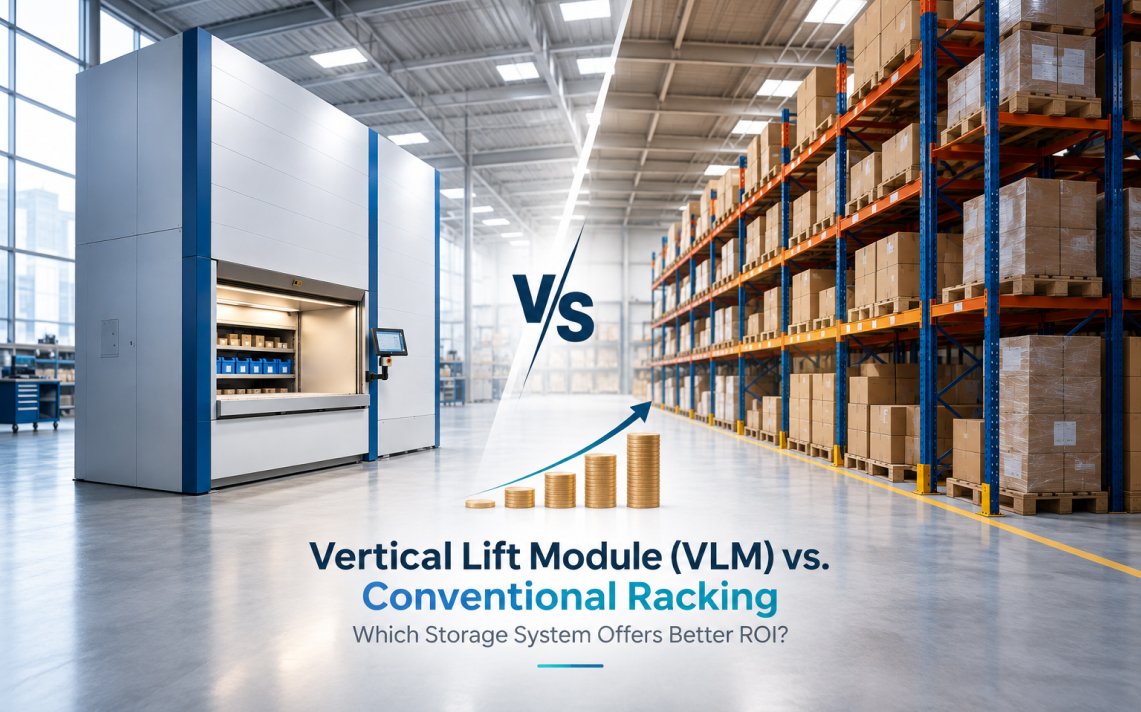
Think of a VLM as an industrial-grade, ultra-high-density automated vending machine. Inside a sealed vertical shaft, trays are automatically measured and stored based on height, maximizing every single centimeter of vertical space. When an operator needs a part, the system retrieves the correct tray and presents it at an optimal access window.
The Space Recovery: VLMs can reclaim up to 80% of floor space compared to conventional shelving.
The Accuracy Leap: Picking accuracy jumps to near 99%, entirely eliminating the “lost item” search game.
2. Automated Storage and Retrieval Systems (ASRS)
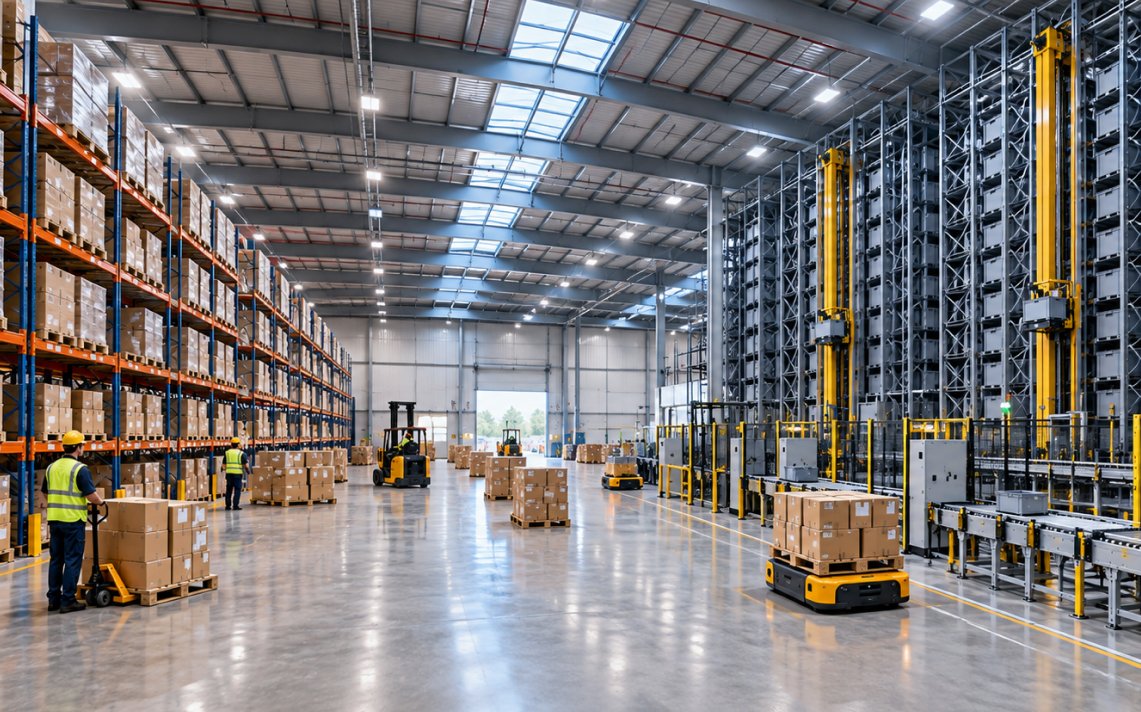
For facilities managing heavy loads, high-density pallets, or high-throughput inventory, ASRS solutions provide the backbone of modern automation. Controlled by advanced warehouse software, robotic cranes and shuttles handle storage and retrieval with surgical precision and zero manual fatigue.
3. High-Density Mechanical Solutions (Mobile Compactors & Heavy-Duty Racks)
Not every corner requires full robotics to see massive gains. Upgrading to mobile compactors eliminates permanent, wasted aisles by letting operators open up an aisle only when needed, drastically compressing the footprint required for heavy industrial inventory.
Why Smart Automation is Essential for Modern Supply Chains
Adopting warehouse automation isn’t about chasing futuristic tech aesthetics—it solves the hard, day-to-day pain points keeping supply chain directors awake at night:
The Labor Crunch: Manual storage is physically punishing and prone to high turnover. Ergonomic vertical storage reduces workplace strain, cuts training time for new hires from weeks to hours, and keeps teams safe.
Intelligent Software Integration: Modern hardware is only as good as its digital brain. Integrating robust Software for Automated Storage ensures real-time inventory tracking, low-stock alerts, and flawless synchronization with existing ERP and WMS platforms.
Future-Proof Scalability: Modular systems allow businesses to expand their operational capacity over time without having to pack up and move facilities every few years.
Turning Dead Space Into Your Greatest Asset
The next time you do a walk-through of your facility, pause and look upward. If you see empty space above your racks and workers logging thousands of steps just to pick a handful of parts, your warehouse has hidden capacity just waiting to be unlocked.
Solving modern storage challenges doesn’t require a bigger building. It requires a smarter blueprint.
For over two decades, engineering pioneers like Tech Mark have been helping businesses across India transition from reactive storage headaches to streamlined, high-performance warehouse automation. Specialising in everything from custom ASRS and Vertical Lift Modules to heavy-duty racks and intelligent software, Tech Mark delivers turnkey solutions engineered for real ROI.
Ready to stop searching for space and start finding efficiency? Evaluate your workflow, look upward, and see how intelligent vertical storage can revolutionize your bottom line.