Vertical Lift Module (VLM) vs. Conventional Racking: Which Storage System Offers Better ROI?

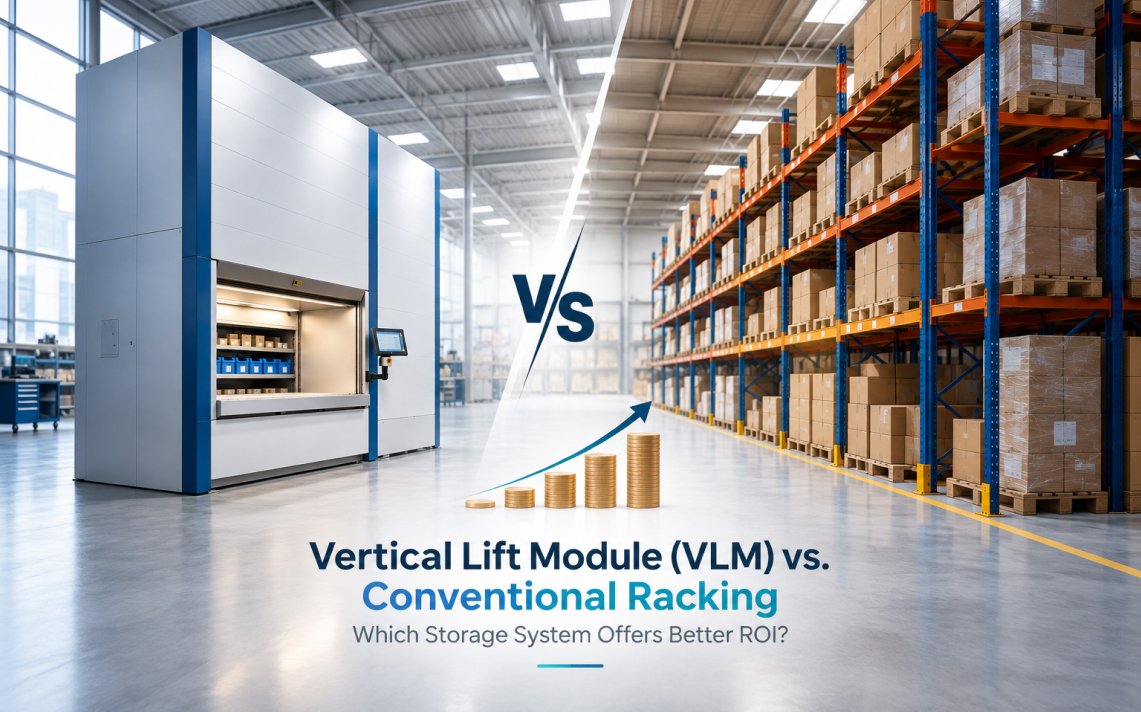
Vertical Lift Module (VLM) vs. Conventional Racking: Which Storage System Offers Better ROI?
As modern production lines accelerate, traditional warehouse storage methods are becoming major operational bottlenecks. Storing spare parts, tooling, components, and finished products on standard static shelf units or heavy-duty pallet racks worked well decades ago, but today’s market demands speed, traceability, and extreme space efficiency.
If you are evaluating whether to upgrade to a Vertical Lift Module (VLM) or stick with traditional static pallet racks, this in-depth comparative analysis covers space utilization, picking speed, inventory control, and total cost of ownership (TCO).
What is a Vertical Lift Module (VLM)?
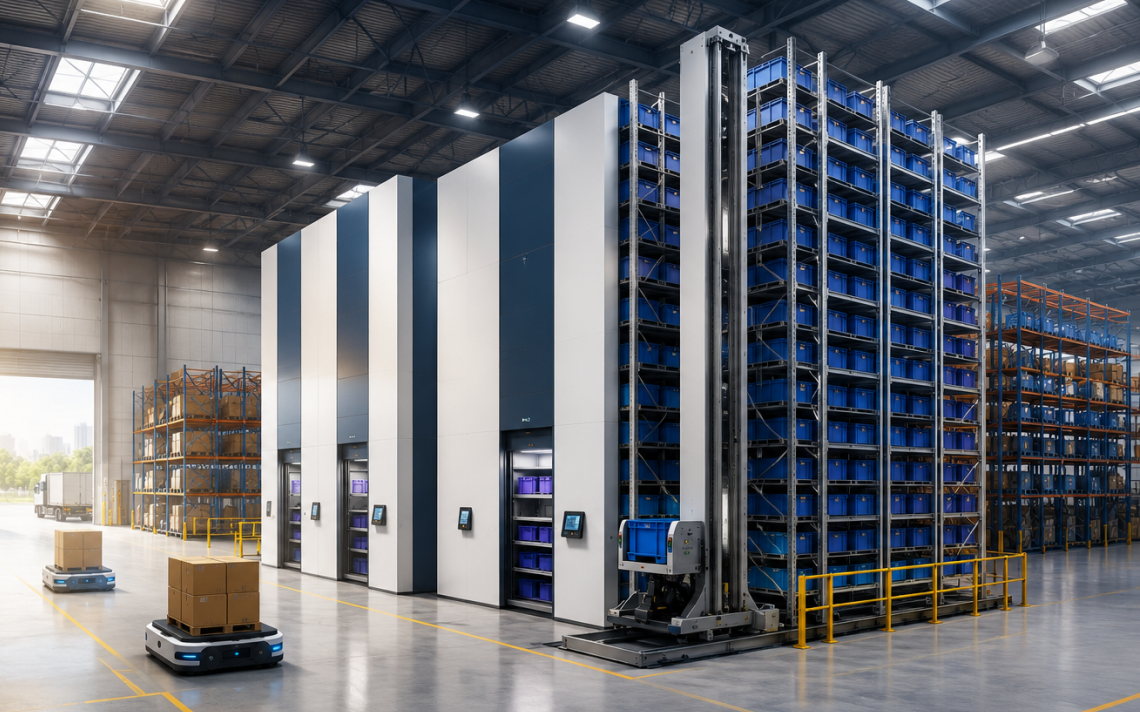
A Vertical Lift Module (VLM) is an enclosed, high-density automated vertical storage system. It consists of two columns of trays (front and back) and a central mechanical elevator platform.
When an operator requests an item via the touchscreen panel or barcode scanner, the elevator automatically locates the correct tray, retrieves it, and delivers it to an access opening at a comfortable working height.
- Detailed Breakdown: VLM vs. Conventional Racking
1.Vertical Headroom & Floor Footprint
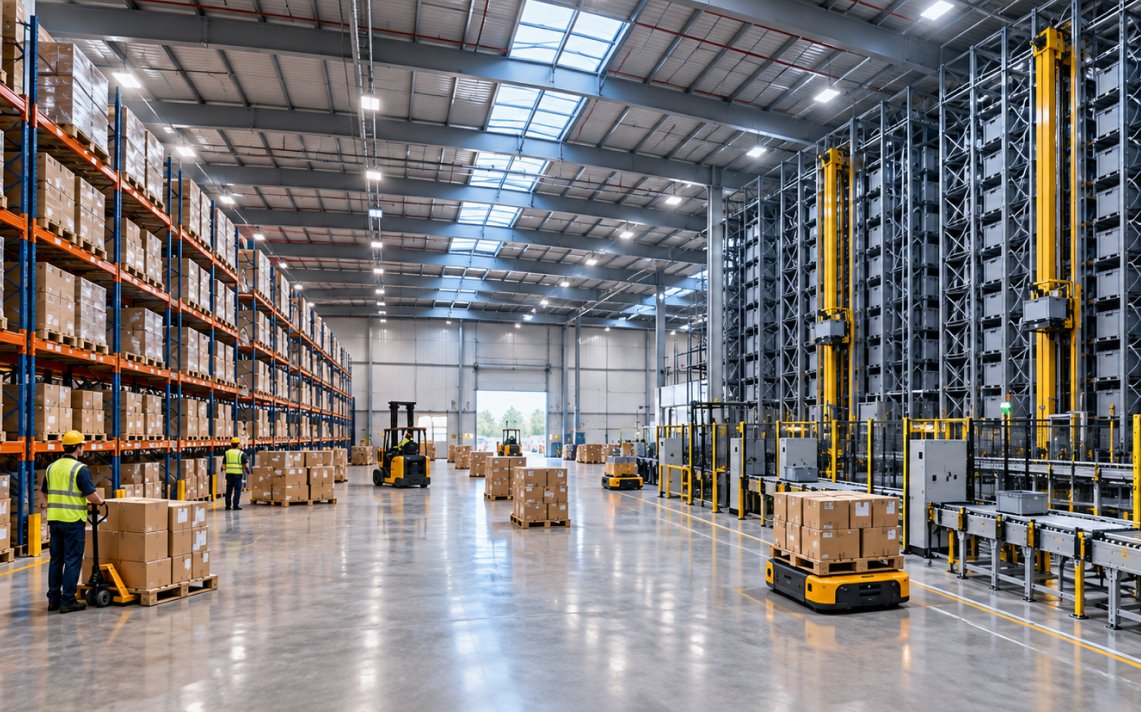
Conventional Racking: Limited by standard forklift reach and physical worker access. Up to 60–70% of upper ceiling space remains empty. Wide aisles are mandatory to accommodate material handling equipment like reach trucks or forklifts.
Tech Mark VLM: Takes full advantage of available ceiling height up to 15 meters while using a minimal footprint. Integrated dynamic height sensors scan the height of stored parts on each tray and dynamically position trays to eliminate wasted vertical gaps between levels.
2. Picking Velocity and Human Travel Time
Conventional Racking: Workers spend up to 65% of their shift walking through long aisles, searching for part numbers, climbing ladders, and carrying heavy items back to the packing desk.
Tech Mark VLM: Operates on the Goods-to-Person principle. The machine handles all vertical and horizontal travel. The item is delivered directly to the operator in seconds, boosting picking speeds by up to 300%
3. Inventory Traceability and ERP Integration
Conventional Racking: Relies heavily on manual paper logs or periodic manual barcode scans. Misplaced parts are frequent, leading to phantom stock outs and emergency rush orders.
Tech Mark VLM: Equipped with smart inventory management software that interfaces seamlessly with SAP, Oracle, or custom WMS platforms. Every pick and put-away transaction is updated live with complete user accountability.
Beyond VLMs: Tech Mark’s Comprehensive Dynamic Storage Portfolio Depending on your facility’s SKU mix, weight requirements, and material flow, Tech Mark engineers and manufactures a complete suite of automated systems:
Mini-Load ASRS: Designed for rapid tote and small-parts buffer management.
Double-Deep ASRS: Optimized for high-density, automated heavy pallet storage
Lean Store & V-Store Systems: Ideal for vertical carousel storage of electronics components, hardware, small assemblies, and automotive spares.
Mobile Compactors & Heavy-Duty Racks: High-density mechanical storage for industrial tools and archives.
The Verdict: Upgrading to Automated Vertical Storage
While conventional static racking has a lower upfront purchase price, its ongoing hidden costs wasted floor space, low picking productivity, inventory discrepancies, and worker fatigue—make it significantly more expensive over time. A Tech Mark Vertical Lift Module (VLM) provides a scalable, future-proof automation platform that pays for itself rapidly while protecting your operational bottom line.
Request a Free Warehouse Space & Storage Audit
Ready to see how much floor space you can save? Tech Mark’s engineering team will analyze your current layout, SKU dimensions, and order throughput to design a custom high-density storage solution.